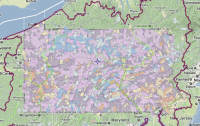
Watershed Conservation Prioritization
Watershed Conservation Prioritization highlights riverine conditions by distinguishing the conservation concern of watersheds through use of data from the Aquatic Community Classification (ACC). Information for this prioritization included: the biological classification, fish and macroinvertebrate biological metric scores, and results from the least-disturbed stream (LDS) reach analysis.
The ACC biological community information provides a qualitative way to examine watersheds based on biological assemblages and the various stream habitat types that occur within it. We performed this analysis with only communities that indicate quality habitat conditions, which allowed us to select stream reaches with relatively unaltered habitat condition. See chapters 4 through 7 of the ACC User's Manual for more information about community groups, their respective habitat types and the water quality conditions in which they are found.
The ACC biological community information provides a qualitative way to examine watersheds based on biological assemblages and the various stream habitat types that occur within it. This analysis included only community’s indicative of habitat conditions, which allowed selecting stream reaches with relatively unaltered habitat condition. Information about community groups, their respective habitat types and the water quality conditions in which they are found are available in Chapters 4 through 7 of the ACC User's Manual.
Biological metric calculations quantitatively rank streams and watersheds related to habitat and water quality and how closely biotic assemblages reflect natural ecological function. Both fish and macroinvertebrate data were used for metric scores in this analysis. These metric calculations are similar to those used in Indices of Biotic Integrity (IBI), which are commonly used to synthesize data about water quality and biological diversity.
For more information on Watershed Conservation Priorities and the data used to select them, see Chapter 10 of the ACC User's Manual.